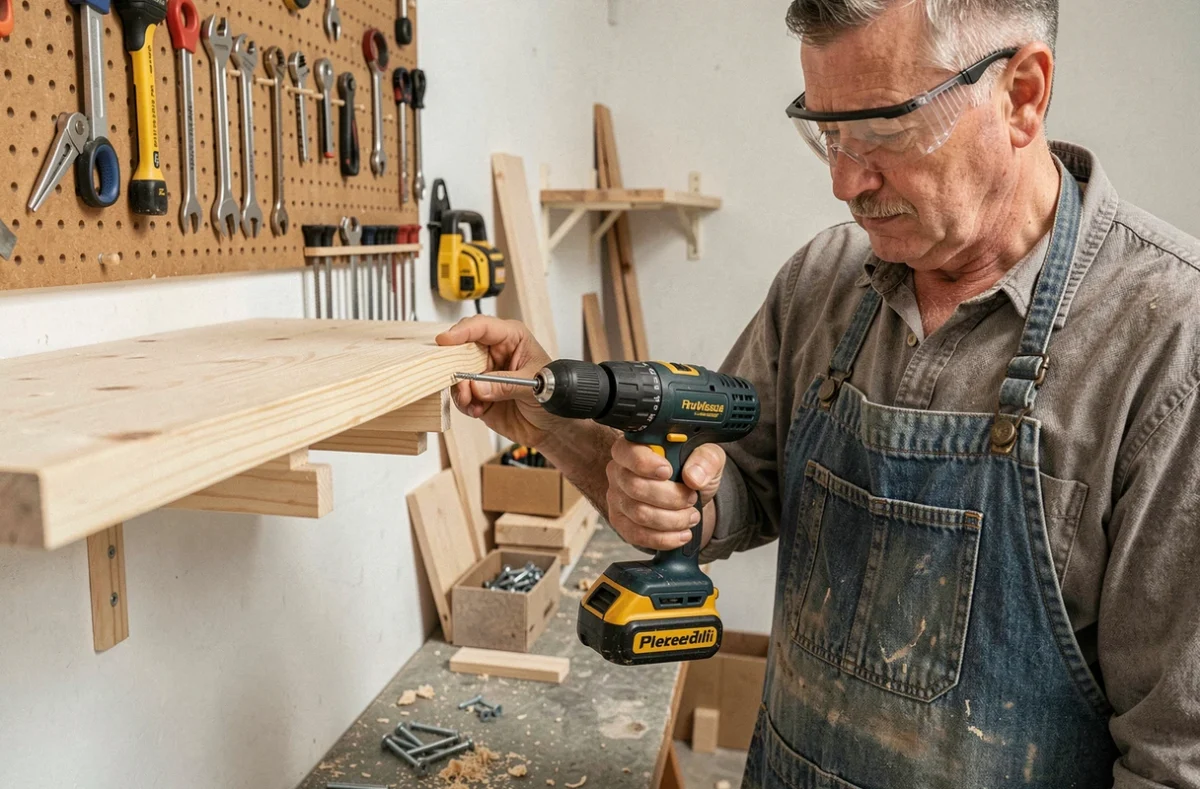
The hammer, the angle grinder, the tape measure: three tools starting with M that every DIY enthusiast owns, but whose technical selection deserves more attention than a mere glance at the hardware aisle. Behind each tool beginning with M lies a specific usage, a safety constraint, or a purchasing trap that alphabetical lists never mention.
Angle Grinder: Product Recalls and Compliance of the Protective Guard
The angle grinder remains the most versatile M tool for home DIY. It cuts, deburrs, sands, and strips. It is also the tool most involved in serious domestic accidents related to DIY.
Since 2024, several grinders intended for the general public have been subject to recalls in France. The recurring reason: an insufficient disk guard, with a risk of projecting abrasive fragments towards the user. These alerts are published on the site rappel.conso.gouv.fr, but most DIY enthusiasts never check this database before making a purchase.
We recommend systematically checking three points before using a domestic angle grinder:
- The protective guard covers at least the upper half of the disk and remains attached to the machine when changing position.
- The model is not listed in the current product recalls (a search by brand and reference takes less than a minute).
- The mounted disk matches the diameter and maximum rotation speed indicated on the machine’s nameplate.
A complete inventory of tools starting with M helps to position the grinder among other common equipment, but no list replaces this compliance check.

Hammer and Mallet: Choosing the Right Head for the Right Material
The flat-headed carpenter’s hammer covers the majority of domestic tasks. Its standard weight ranges from 300 to 500 grams for regular use. Beyond that, we enter the realm of the maul and the club, intended for demolition or light masonry work.
The mallet replaces the hammer whenever the struck piece must not be marked. A rubber mallet absorbs the shock without deforming the surface. A hardwood carpenter’s mallet (hornbeam, beech) allows for the use of a chisel without crushing the handle.
The frequent confusion concerns the club. In home DIY, the club is used to drive masonry plugs or to break a tile before removal. Its weight, significantly greater than that of a standard hammer, requires striking with the arm and not the wrist, under penalty of quick tendonitis.
Vibrations and Exposure Limits
For powered striking tools (electric jackhammer, demolition hammer), the European directive 2002/44/EC sets a vibration exposure limit of 5 m/s² over 8 hours. This constraint targets workers, but it provides a useful benchmark for the amateur DIYer renting this type of equipment for a weekend of work.
In practice, an entry-level electric jackhammer often exceeds this value. Wearing anti-vibration gloves and limiting sessions to short periods significantly reduces the risk of carpal tunnel syndrome.
Tape Measure, Folding Measure, and Multimeter: Precision as a Common Thread
The 5-meter tape measure with automatic locking covers almost all domestic needs. The folding measure, often made of fiberglass or wood, is preferred by carpenters for its rigidity over short distances. The two complement each other.
The real trap of domestic measurement lies in the hook of the tape measure. This hook must have a calibrated play: it shifts slightly when pushed against a surface (internal measurement) and when pulled (external measurement). A bent or stuck hook skews every measurement by the thickness of the hook itself.
The multimeter, although classified among electrical measuring tools, belongs to the category of underutilized M tools in home DIY. Checking the voltage of a socket, testing the continuity of a wire, or identifying a blown fuse: these basic operations require only an entry-level multimeter and a few minutes of learning.
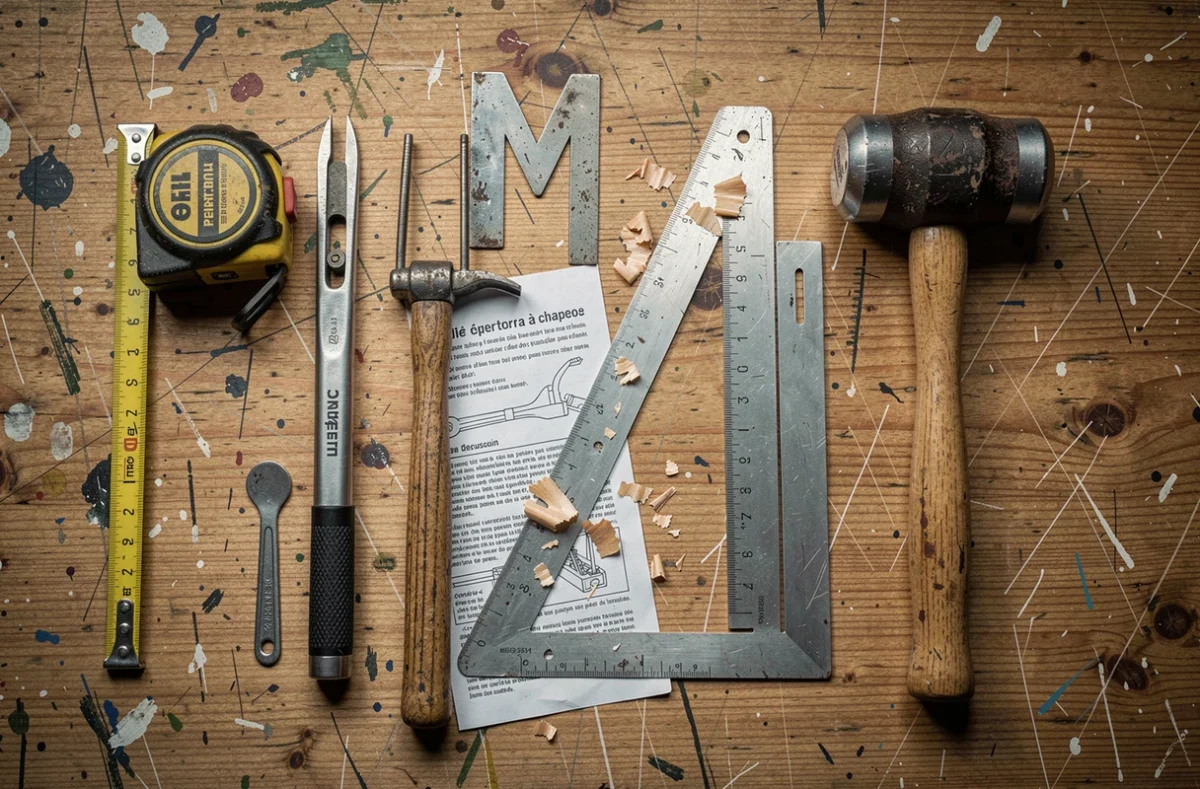
Multi-Function Tools in M: Tiller and Quick Chuck
The tiller meets a need that neither the spade nor the tiller fulfills correctly in a modest-sized garden. It turns the soil to a sufficient depth to prepare a vegetable garden or flower bed, without the weight or cost of a tiller.
In the workshop, the quick chuck (self-tightening chuck) has replaced the keyed chuck on most current drill-drivers. Changing the bit is done by hand, without additional tools. However, an entry-level quick chuck loses grip under high torque. For drilling concrete or thick metal, a keyed chuck remains more reliable than a low-end self-tightening chuck.
Bit and Drill: Vocabulary Matters
In DIY, “bit” generally refers to a wood drill bit (flat bit, spiral bit). The term “drill” applies to metal and concrete. Confusing the two leads to using a concrete drill bit in wood (splintered hole) or a wood bit in metal (bit destroyed in seconds).
Assembling a suitable M tool kit for your projects requires going beyond a simple alphabetical list. Choosing the right hammer, the right grinder, the right measure, and the right chuck relies on precise technical criteria, not just the lowest price in the aisle. A recalled grinder due to a faulty guard costs much more than a compliant model bought for a few euros more.