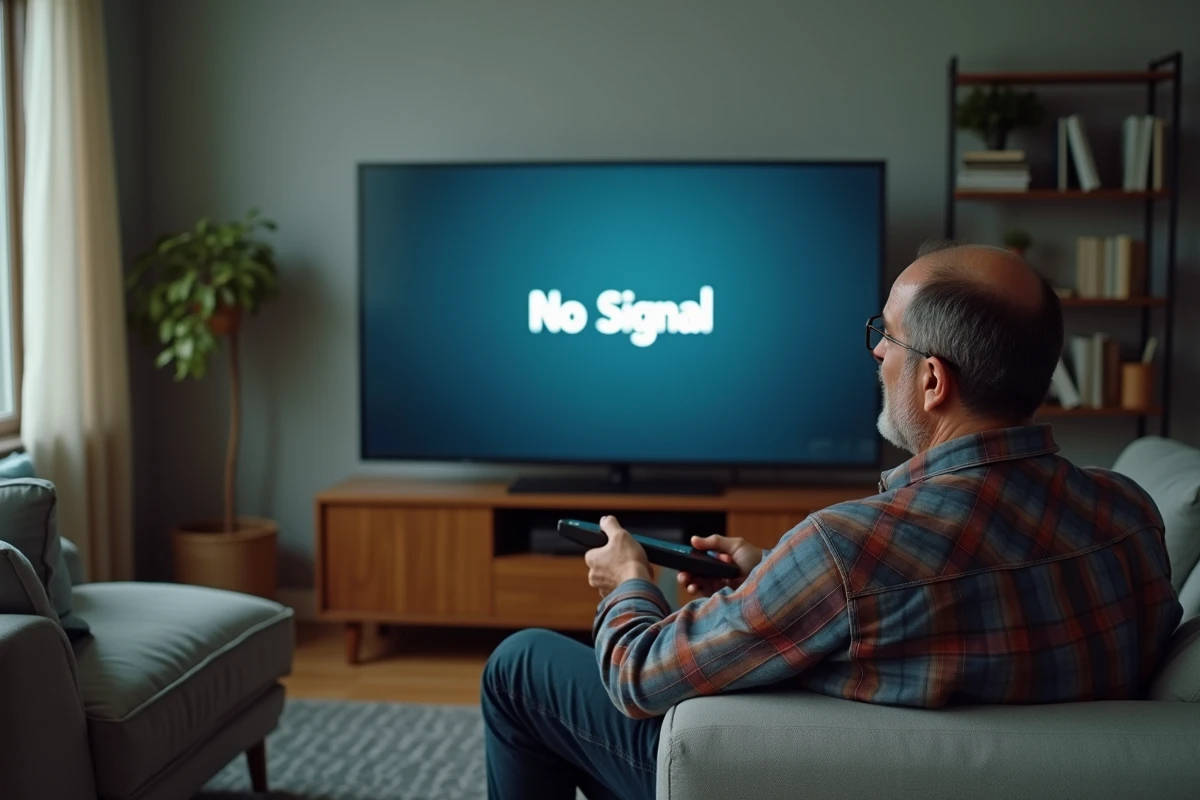
In the French mapping of television channels, some numbers remain stubbornly absent, even after yet another search. The R7 multiplex, which includes channels like L’Équipe or 6ter, is not available across the entire French territory, despite the widespread adoption of DTT since 2011. The sudden appearance of missing channels after an automatic search does not necessarily indicate a fault with the device or the antenna. Some recent televisions automatically filter out frequencies deemed too weak or unstable, thus excluding channels that are accessible with older equipment or a manual search. A software update for the television or decoder can also change the list of available channels without warning.
Why do some DTT channels suddenly disappear from your television?
Seeing a channel number disappear without warning can unsettle any viewer. However, a black screen or the disappearance of a channel does not necessarily point to a hardware problem or a faulty connection. Often, the explanation lies elsewhere: changes by the broadcaster, discreet renumbering, or a frequency that drops out during an automatic scan. Sometimes, your television, or its software, sorts for you, without any warning, eliminating any frequency deemed unstable or weak.
One point that is often overlooked remains: the reception of DTT channels on television depends on multiple technical details. A cable a few years old, an oxidized socket, a moved piece of furniture, or the antenna oriented just one degree too much, and certain channels suddenly disappear from the list. On newer televisions, the hunt for weak signals is automatic where older models sometimes allowed imperfections to pass. A simple bug or a system update can disrupt the established order and deprive the screen of certain channels without notice.
Alongside these factors, other variables come into play: operator interventions, changes in the network, weather fluctuations, unexpected gusts, or storms that temporarily disrupt the signal. These disappearances are sometimes temporary, sometimes lasting. Rescanning for DTT channels is usually enough to repair the grid and recover what seemed lost, just a few minutes and a few presses on the remote, without any special expertise.
Common causes of poor reception: interference, equipment, or weather?
When reception fails, several factors can overlap and complicate access to channels. Here are the most common issues:
- More than one might want to believe, the condition of the antenna socket: loose connections, poor fittings, or points of oxidation are enough to sabotage the signal right from the source.
- Another source of trouble is the cables: a pinched wire, worn insulation, or even a poorly pulled cable can introduce interference or partial losses depending on the time, weather, or their position in the room.
- One cannot ignore the decoder: repeated errors, freezes, or sudden cut-offs invite checking its settings and, very often, all the connections.
In the immediate environment, many devices generate interference without us realizing it: microwaves, power supplies, chargers plugged in continuously emit disturbances that can affect the stability of the signal. Add to this the whims of the weather, heavy rain, snow, gusts, and you have a reception that is anything but guaranteed.

Concrete solutions to regain all your channels and optimize your setup
Regaining all channels starts with inspecting each element of the connection. Sometimes, a simple cleaning of the connectors, a replaced cable, or a tightening is enough to restore a stable signal. Taking the time to review each connection can prevent many disappointments.
Next, an automatic search from the television or decoder menu is essential: activating the automatic installation mode allows anyone, even novices, to refresh the channel list and update the frequencies, often in just a few minutes.
If that fails, the interactive map from the National Frequency Agency becomes a powerful asset. It displays the status of nearby transmitters, lists ongoing incidents, and indicates weather blockages or technical operations. There’s nothing worse than tinkering blindly if the outage is collective or comes from the broadcaster itself.
To maximize your chances of restoring the picture, it is recommended to act methodically:
- Inspect cables, sockets, and connections to quickly identify any anomalies.
- Launch a new automatic search whenever a hardware change or a weather event necessitates it.
- Consult the ANFR map to check the status of your transmitter before buying, replacing, or seeking external help.
And if, despite everything, a channel refuses to return? There’s nothing stopping you from using digital solutions: streaming, replay, and online services often fix what terrestrial waves no longer relay. A simple adjustment, a reconnection, and the screen regains its colors, bringing back the familiar concert of voices in the living room.