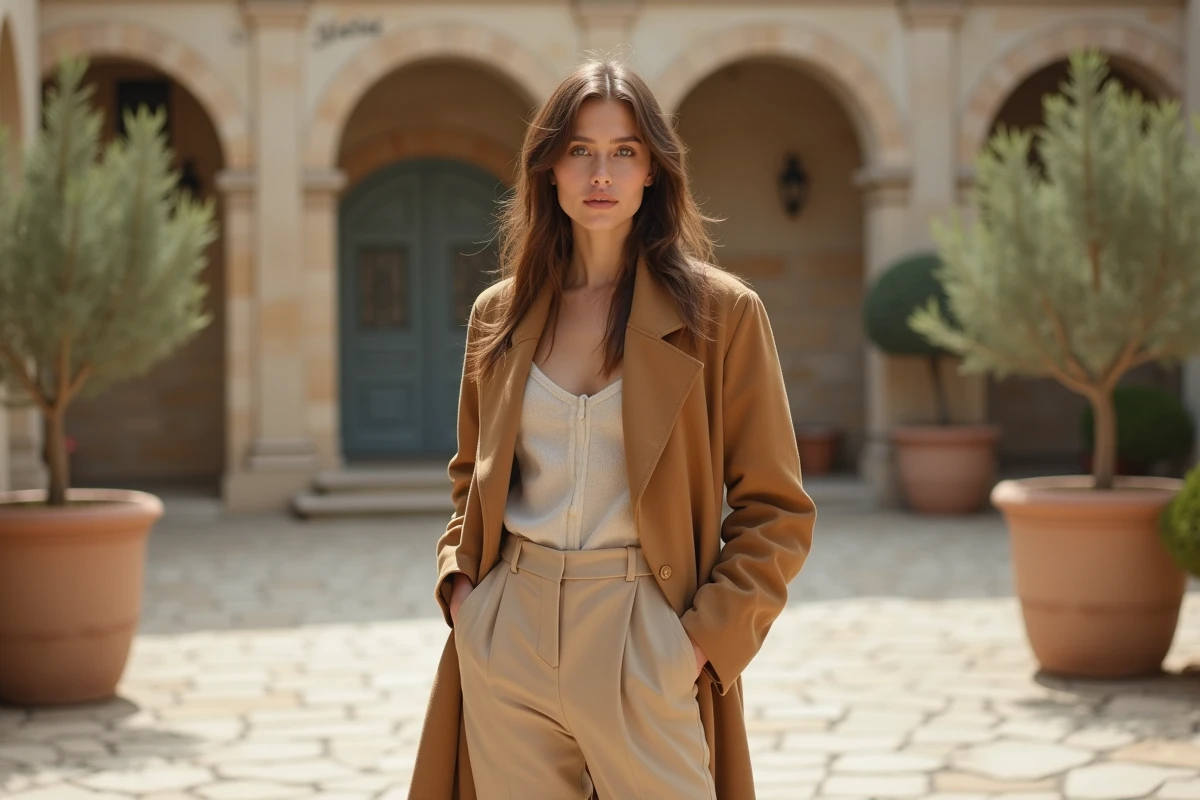
The spring-summer and autumn-winter 2025 fashion shows mark a clear stylistic shift: discreet minimalism is giving way to bolder silhouettes, expressive materials, and a relationship with clothing that blends personal creativity with new regulatory demands. The report “The State of Fashion 2025” published by McKinsey and The Business of Fashion at the end of 2024 confirms this shift towards colorful, customizable pieces made from high-quality materials.
Digital product passport and eco-design: what’s changing for the 2025 collections
The European Regulation on eco-design for sustainable products (ESPR), adopted by the European Parliament on April 23, 2024, reshuffles the cards well beyond green marketing. Brands preparing their fashion collections for 2025 must now integrate a digital product passport tracing the origin of materials, the manufacturing steps, and the environmental footprint of each piece.
At the February 2025 edition of Première Vision Paris, several federations and exhibitors presented “low-impact capsules” officially traced via this passport. The system is not limited to a QR code sewn into the label: it requires a chain of verifiable data, from raw thread to finished product.
For creators, the constraint changes the briefings upstream. Choosing a French linen supplier or a certified dyer is no longer a commercial argument; it is a progressive compliance obligation. The 2025-2026 collections are the first to integrate this logic from the design phase, promoting tighter capsules with fewer references but complete traceability.
Generative AI in textile prototyping: beyond the moodboard
Artificial intelligence is no longer just generating inspiration boards. Since late 2024, groups like Kering and LVMH have been posting job offers for AI print designer and AI research designer positions, visible on their respective career sites.
The change is structural. These positions are not part of digital communication: they are integrated into design studios, alongside pattern makers and textile developers. Generative AI is involved in three concrete stages:
- Prototyping patterns, where an algorithm proposes dozens of variations of a print based on a color and texture brief, reducing the iteration time by several weeks.
- Simulating fabric drape on a virtual mannequin, which limits the number of physical samples needed before validating a silhouette.
- Predictive analysis of assortments, crossing sales data and trend signals to calibrate the quantities produced by reference.
This integration accelerates the creation cycle without artificially shortening it. The goal is not to produce faster but to waste fewer prototypes, a point directly linked to the eco-design requirements mentioned earlier.
Color trends and fashion silhouettes for 2025: from quiet luxury to personal expression
The “quiet luxury,” omnipresent for two seasons, is not disappearing but evolving. High-end consumers still seek noble materials, but they add an expressive dimension absent from the beige and neutral wardrobe that recently dominated.
Saturated colors and Mocha Mousse Pantone
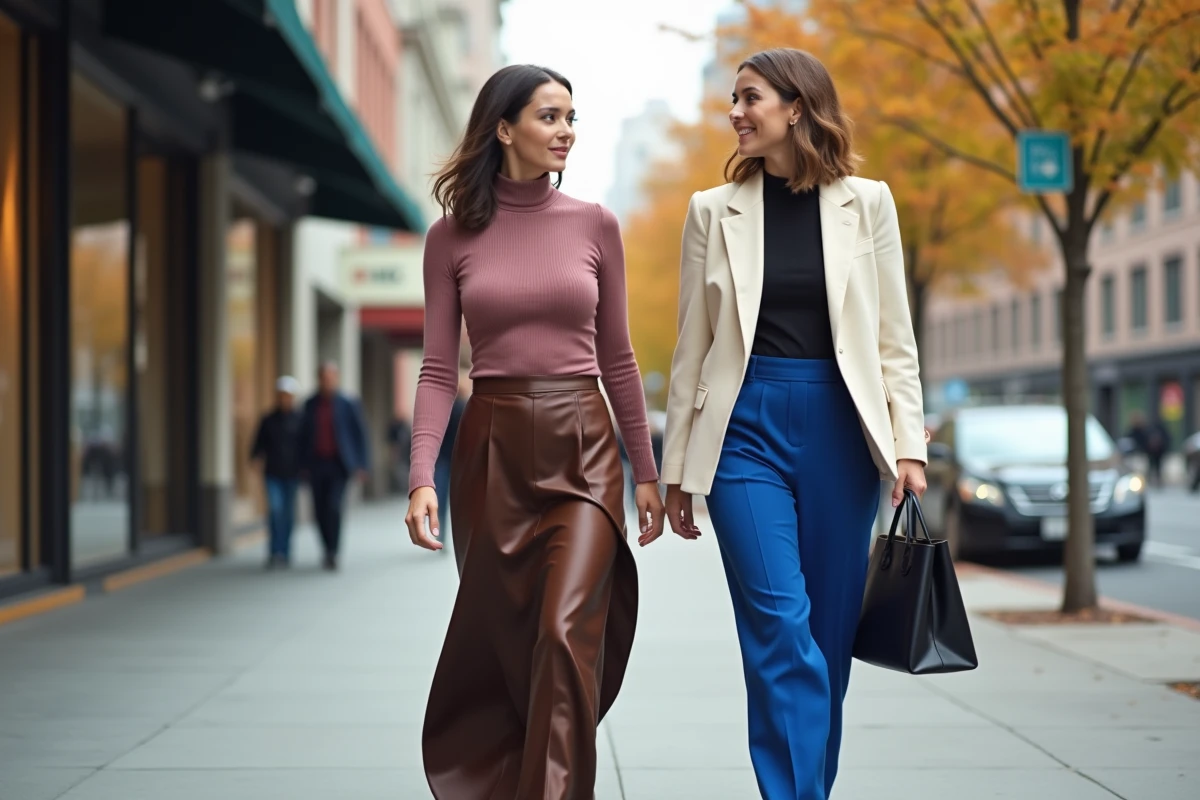
Pantone has named Mocha Mousse as the color of the year 2025, a warm brown reminiscent of coffee foam. This shade pairs with the saturated palettes seen on the runways: deep burgundy, Klein blue, burnt orange. The combination of a sophisticated neutral and a vibrant accent becomes a recurring code.
The palette is not just an aesthetic choice. Saturated dyes are more expensive in terms of environmental certification. Brands adopting bold colors must source compliant dye baths, which explains why many limit these shades to key pieces rather than the entire collection.
Architectural volumes and bold accessories
Oversized cuts and structured shoulders are returning to the autumn-winter 2025-2026 wardrobes. The shows featured extra-long coats, flare-cut trousers, and knee-length skirts in faux fur, far from the discreet fluidity of previous seasons.
On the accessories side, sculpted bags and shoes function as standalone pieces, not just simple complements. Quilted textures, fringes, and artisanal finishes replace smooth monochrome leather. The style is built through an accumulation of details rather than by simplification.
Sustainable sportswear and textile regulation: the convergence of outdoor and fashion
The sportswear and outdoor segment is experiencing a tightening of regulations parallel to that of classic fashion. Technical materials (waterproof membranes, synthetic insulators) are directly affected by future restrictions on certain chemical substances under the ESPR.
This pressure is pushing outdoor brands to develop bio-based alternatives to traditional membranes, with visible results in the spring 2025 collections: windbreakers made from coated cotton, jackets in post-consumer recycled fibers, linings in certified merino wool.
The crossover between urban wardrobes and technical pieces is intensifying. The windbreaker, identified as a key piece at several spring-summer 2025 Fashion Weeks, illustrates this convergence. It is no longer a functional garment repurposed by fashion but a hybrid category designed from the outset for both uses.
The fashion trends for 2025 stand out from previous years due to a technical and regulatory grounding that goes beyond simple style rotation. The digital product passport, AI in design studios, and eco-design constraints are not peripheral topics: they directly determine which pieces arrive in stores, in what colors, and in what quantities.